
Power Plant, a thermal power plant in northwestern Isfahan.i
The plant was sited in 1976–77/1355 on a tract of approximately 2.2 million square meters, fifteen kilometers from central Isfahan and adjacent to the city’s refinery*. The French consulting engineering firm Mertz & Quanta,ii which conducted the project’s feasibility studies, cited three principal reasons for selecting the site: first, Isfahan’s prevailing winds, which generally blow from southwest to northeast; second, proximity to the Isfahan Refinery, which facilitated the use of large quantities of its residual product—mazut, or heavy fuel oil—as fuel for the plant; and third, a suitable distance from the city’s residential areas.1
The idea of building the plant arose in response to the growing demand for electricity in the Isfahan region and as a means of managing the refinery’s residual petroleum products by converting them into the plant’s primary fuel. Until then, Isfahan’s electricity had been supplied by the Eslām-ābād-e Durche Power Plant, the city’s first power station (built in 1960–61/1339), located beside the Zāyande-rūd River*. At the time, low electricity consumption meant that supply was adequate; between 1971 and 1978/1350–56, however, industrial expansion and the construction of large factories in the Isfahan region made it necessary to enlarge the power-supply network.
After the Isfahan plant had been sited, an initial contract for four 200-megawatt units was concluded in 1978–79/1357 between Iran’s TAVANIRiii) and a consortium comprising Russia’s Technopromexport, Poland’s Budimex, and Hungary’s Transelektro.iv2 Under the contract, the Russian company was initially the principal contractor. But due to the fact that the plant was located in a hot and arid region with limited water resources, it was decided that the facility would employ natural-draft dry cooling towers.v These heat-rejection systems transfer waste heat to the ambient air without direct evaporation.3 By reducing water consumption, eliminating evaporation-related scaling and corrosion, and meeting environmental requirements, the system is regarded as a strategic option for power plants in water-scarce regions.4 The technology was used in Iran for the first time at the Isfahan Power Plant. The main contract was consequently transferred to the Hungarian company, which held the technology license and assumed responsibility for constructing the dry towers. The Polish company, the third party to the contract, undertook construction of the water-treatment plant and certain other infrastructure. A water-intake facility near the town of Durche* was also planned, and a water right from the Zāyande-rūd was allocated to the plant.
The contract was to be financed in three ways: partly through barter against Iranian exports—including textiles, leather, foodstuffs, automobiles, and oil—partly through foreign-currency payments for purchasing equipment from third countries, and partly in Iranian rials.
In 1979–80/1358, following the victory of the Islamic Revolution and in view of the perceived risks, the Russian company requested changes to the contract’s financial arrangements, converting part of its rial-denominated receivables into dollar-denominated claims. Notwithstanding, the French firm Mertz & Quanta, which had conducted the siting studies, then ended its involvement, and the Iranian Moshanir Company, affiliated with the Ministry of Energy, continued the work. Construction began in 1980–81/1359, once the necessary infrastructure and preliminaries had been put in place, and proceeded despite the outbreak of the Iraq–Iran War. Through the efforts of Iranian engineers and workers and the parties that remained in the contract, Unit I entered service in October 1984/Mehr 1363. Two months later, amid political developments in Poland, the Polish workers on the project went on strike and soon left Iran. Construction and completion nonetheless continued, and Unit II entered service in February 1985/Bahman 1363. After its completion, the Russian personnel also decided to leave because of wartime conditions. Unit III was then only 70 percent complete and Unit IV only 40 percent complete, placing the project in its most critical phase. Any delay in commissioning the units would have left the Isfahan Refinery’s mazut—designated as the plant’s fuel—without a use, while storing and maintaining such a large volume would have posed a major environmental hazard. Under these circumstances, the plant’s Iranian workers, engineers, and managers resumed the work immediately, only two days after the Russians departed. Unit III entered service in March 1986/Esfand 1364 and Unit IV in October 1989/Mehr 1368. The plant may therefore be regarded as the first power-generation project in Iran in which Iranian specialists installed a substantial portion of the turbines.
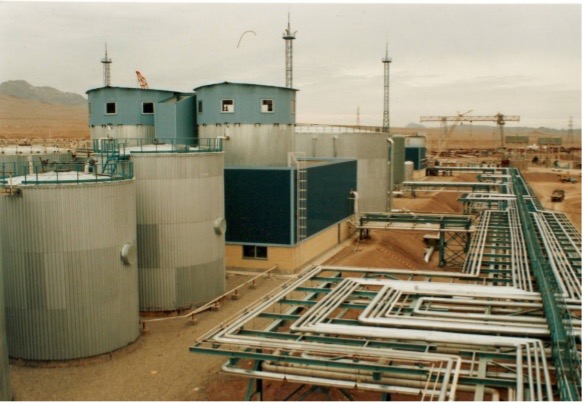
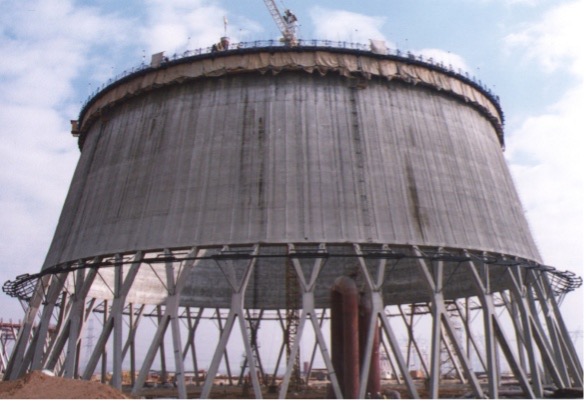
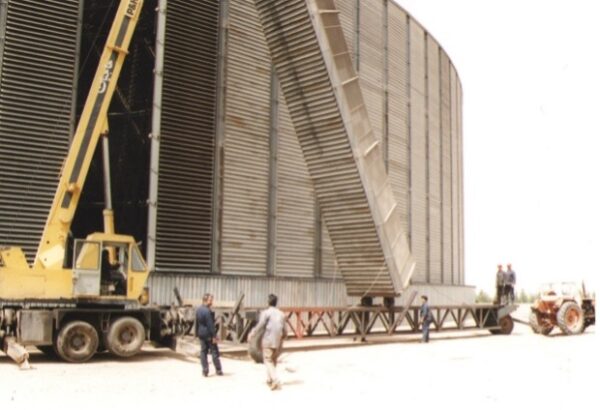
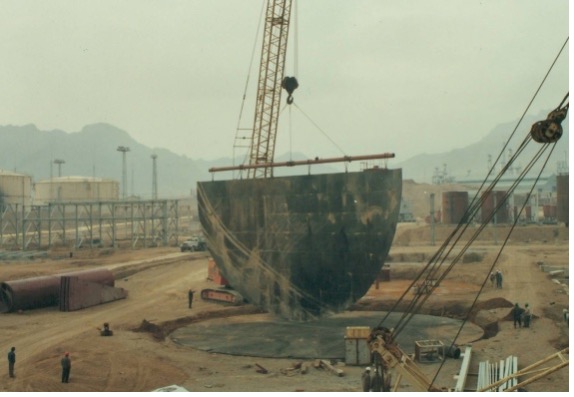
Images showing the construction stages of Shahid Montazeri Power Plant
During the Sacred Defense* (1980–88/1359–67), particularly after the Russians had left Iran, aircraft of Iraq’s army attacked the power-plant and refinery area three times. In addition to material damage, five employees engaged in the plant’s construction and operation were martyred: Ghulām-Reza ‛Amū and Aḥmad Rastegārī (March 18, 1986/27 Esfand 1364), Shukr-Reza Nāmdār-nezhād (October 12, 1987/20 Mehr 1366), Aḥmad Edrīsīyān-pūr (October 12, 1987/20 Mehr 1366), and Reza Esḥāqīyān (November 12, 1986/21 Ābān 1365).
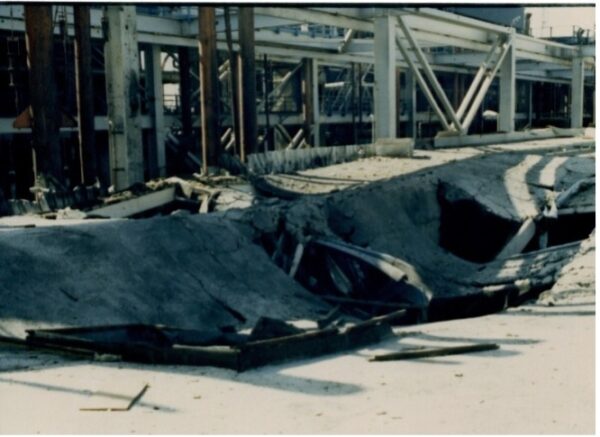
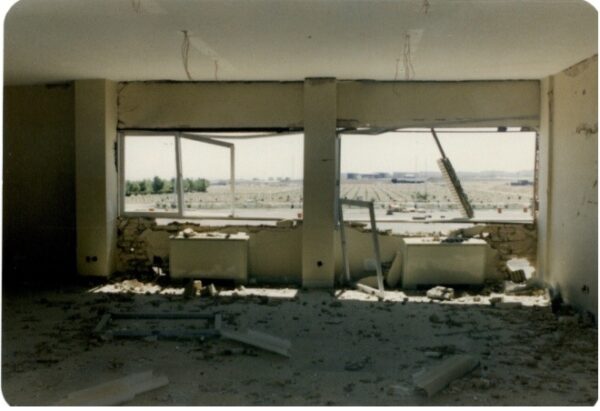
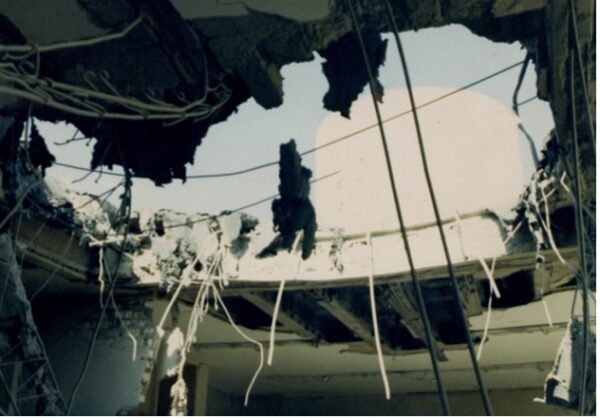
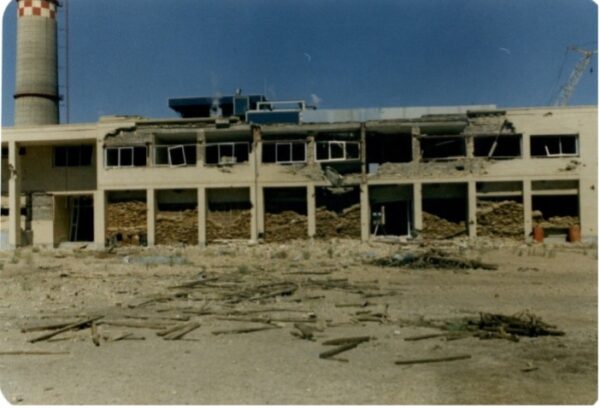
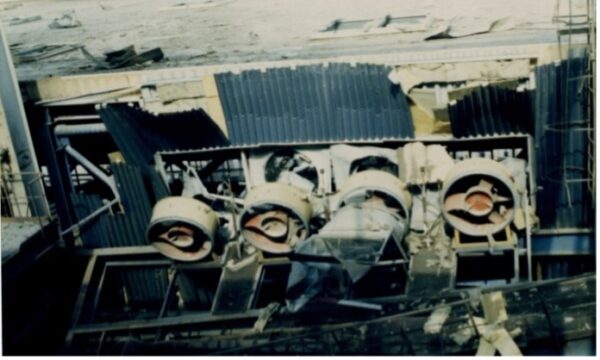
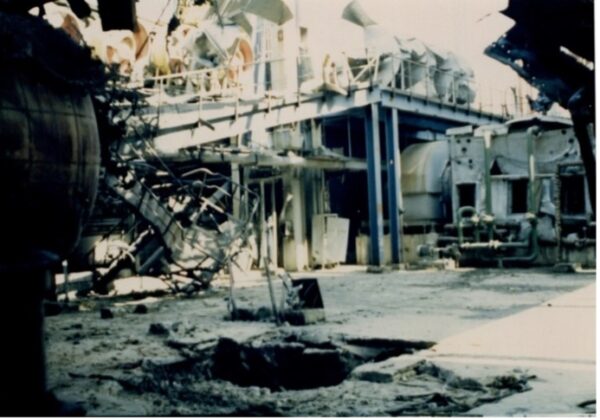
The power plant under aerial bombardment by Iraqi Baathist fighter aircraft
After the Iraq–Iran War ended in 1988–89/1367, officials of the two countries met in Moscow within the Iran–Russia Economic Committee. They proposed adding four 200-megawatt units as part of the plant’s expansion, and Russia’s Technopromexport was commissioned to build four units similar to the existing ones. Despite persistent financing difficulties, implementing the contract and completing the units took about ten years. The completion cost was estimated at approximately $500 per kilowatt of generating capacity, or a total of $800–850 million. Expansion nevertheless continued steadily: Unit V joined the national grid in June 1998/Khurdād 1377, Unit VI in December 1998/Āẕar 1377, Unit VII in July 1999/Tīr 1378, and Unit VIII in November 1999/Ābān 1378.5
Isfahan Power Plant remained under the government and the Ministry of Energy until 2011–12/1390. With the growing emphasis on privatization in the national economy under Article 44 of the Iranian Constitution, however, the Iranian Privatization Organization offered the plant at public auction. The notice also included the Lushān, Ṭūs, and Fārs Combined-Cycle power plants and portions of the shares in their electricity-generation management companies.6 Persian Fūlād Isfahan Company* won the auction and acquired 95 percent of the plant’s shares.vi The transaction was a turning point in the plant’s management, transferring ownership from the public to the private sector. Although the transition was neither simple nor without tension, Persian Fūlād Company managed it rapidly and avoided serious disruption to employees’ working arrangements or electricity generation.7 Privatization of the plant’s management and ownership was followed by measures to increase efficiency, including upgrades to generation technology and improvements to the Heller dry-cooling system, which minimizes water consumption. Purchasing treated wastewater from western Isfahan, together with new water-treatment networks, also improved generating efficiency. Consequently, in spring 2020/1399 the plant ranked first among the country’s steam power plants for available energy rate, operating factor, and availability, and third for reliability.8
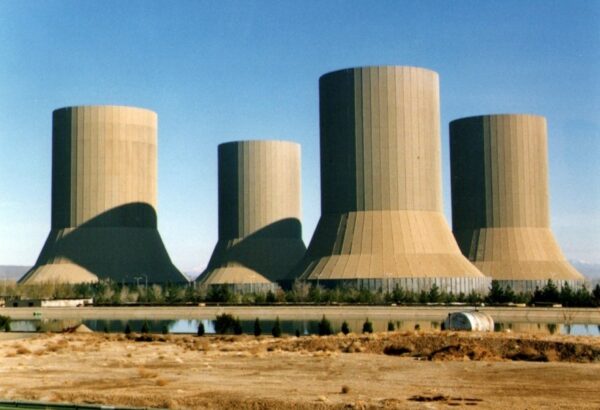
The concrete-shell cooling towers serving four 200-megawatt units were designed and constructed for the first time in 1995–96/1374 by Boland Payeh Company, the project’s contractor and executor. They replaced the former metal towers as the plant’s cooling system. In 2011–13/1390–91, two expansion-turbine units, each with an 8-megawatt capacity, were installed at the Isfahan Power Plant.9 Using the pressure energy of incoming natural gas, these turbines generate electricity and improve the plant’s overall efficiency by preventing energy loss.
From 2013–14/1392, the plant’s new management gradually took the dual-fuel units out of service and shifted the plant fully to liquid fuel and natural gas. Eliminating mazut earned the facility classification as a “green industry.” In exceptional circumstances during the cold season, when the country faces a severe gas-supply imbalance, the plant may be compelled—under a resolution of the National Security Council—to burn mazut, prompting media criticism and protests by environmental advocates.10 Joint studies by Isfahan University of Technology* and the University of Isfahan* estimate that under normal conditions, when mazut is not used, the plant contributes less than one-tenth of one percent of Isfahan’s air pollution. Thus, although the plant is a source of air pollution, it is not the city’s principal polluter.11 In keeping with its environmental commitments, during the cold season the plant also temporarily seals mazut burners, takes certain units offline, and reduces generation in order to minimize its share of air pollution.12 This process is managed so as not to create an energy-supply crisis in Isfahan Province.
Plant management has undertaken several other measures to reduce air pollution and improve Isfahan’s environment, including creation of approximately 280 hectares of green space in the area. This landscape was irrigated with treated wastewater conveyed from Shāhīn Shahr*. In recent years, however, the wastewater sold to the plant has at times cost substantially more than the full cost of agricultural water, raising doubts about its continued use.13 Another notable measure to protect public health and advance the environmental rights of Isfahan’s citizens has been installation of online systems for monitoring, controlling, and analyzing stack emissions. Collectively, these efforts earned the plant three Silver Plaques in Iran’s Green Industry awards.14 To continuously improve service quality, productivity, and occupational safety, Persian Fūlād Company has also implemented quality-management systems and obtained internationally recognized certifications, including an Integrated Management System (ISO 9001, ISO 14001, and ISO 45001) and the workplace-organization system known as 5Svii.15
Over time, the plant’s specialists acquired the expertise needed to localize technology, manufacture equipment, and perform major maintenance and overhauls; many formerly manual processes were also digitized by the workforce.16 In 2015–16/1394 , the technical staff completed the major overhaul of phase III in a record sixty-four days, the first such achievement in the history of Iran’s electric-power industry. The accomplishment earned a commendation from TAVANIR’s chief executive at the time.17 Through the work of researchers at the plant and at outside companies—especially Isfahan Science and Technology Town*—more than 95 percent of the plant’s required parts are now designed and manufactured using domestic technical knowledge. A biotechnology-based wastewater-treatment system, developed in cooperation with the Vice Presidency for Science and Technology and the Nanotechnology Initiative Council, entered service in 2016–17/1395 to supply the plant’s water needs.
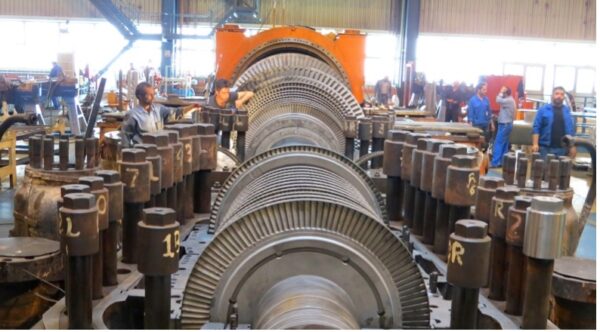
Major overhaul of the power plant, 2015–16/1394
One of the plant’s principal development programs seeks to improve performance, reduce gas consumption, and raise efficiency by converting the facility to combined-cycle generation. Accordingly, in March 2023/Esfand 1401 an agreement with the MAPNA Groupviii provided for expansion and modernization through construction of three 664-megawatt combined-cycle blocks, with a total capacity of 1,992 megawatts. If implemented, the project would nearly triple efficiency and substantially reduce water consumption. Its execution and the replacement and modernization of equipment, however, require domestic and foreign investment, and financing has not yet been secured.18 With an efficiency of 34 percent and an availability factor of 86 percent, Shahid Montazeri Power Plant is among Iran’s leading electricity suppliers. According to the latest figures (spring 2025/1404), it supplies 50 percent of Isfahan Province’s electricity and 3.3 percent of the national total. Employing 780 people directly, it is one of the country’s largest privately owned power plants.19
/Elham Sahami/
Stages in the construction of Isfahan Power Plant
Bibliography
Eftekhārī, Muḥsen, former chief executive of Isfahan Power Plant, exclusive interview for Isfahan Power Plant, 2018–19/1397, “tulīd-e barq bā tamām-e ẓarfīyat dar nīrūgāh-e shahīd muntaẓerī-ye Isfahan”, Aparat, 2025–26/1404
Retrieved May 13, 2026, from https://www.aparat.com/v/svq0et5
Iranian Privatization Organization, 2011–12/1390
Retrieved May 13, 2026, from https://ipo.ir/5895.
Ḍīyāʾī, ‛Abd al-Ghafūr, deputy supervisor of Persian Fūlād Company’s power plants and former chief executive of Isfahan Electricity Generation Management Company, exclusive interview, 2018–19/1397 made by Elham Sahami.
Falāḥatīyān, Muhammad, chief executive of Persian Holding Company, interview by Elham Sahami, August 18, 2025/27 Murdād 1404.
Gul-‛Alīzāde, Dāryūsh, “vaqtī tuse‛e az tavān-e sarzamīn-e Isfahan jelu mīzanad” (interview), Iranian Students’ News Agency (ISNA), 2025–26/1404
Retrieved May 13, 2026, from https://www.isna.ir/news/1404111910704
Isfahan (Shahīd Muhammad Muntaẓerī) Power Plant, 2026–27/1405
Retrieved May 13, 2026, from https://www.montazeri-ccpp.ir
Kulūshānī, Muṣṭafā, operations project manager at Isfahan Power Plant, interview by Elham Sahami, October 25, 2025/3 Ābān 1404.
Ruiz, J., et al., “Performance Evaluation of Natural Draft Dry Cooling Towers and Pre-Cooled Natural Draft Dry Cooling Towers in Concentrated Solar Power Plants,” Energy, vol. 333 (October 2025).
Sun, Yubiao, Zhiqiang Guan, and Kamel Hooman, “A Review on the Performance Evaluation of Natural Draft Dry Cooling Towers and Possible Improvements via Inlet Air Spray Cooling,” Renewable and Sustainable Energy Reviews, vol. 79 (November 2017).
- The facility was originally established as Isfahan Power Plant. After the Islamic Revolution, it was renamed in honor of Shahid Mohammad Montazeri, who was killed in the June 28, 1981/7 Tīr 1360 in terrorist bombing of the Islamic Republican Party headquarters.[↩]
- Mertz & Quanta Consulting Engineers, national registration no. 101100098836; registered August 20, 1966/29 Mordād 1345.[↩]
- Iran organization for Management of Electric Power Generation and Transmission (TAVANIR[↩]
- Ganz Transformers and Electric Rotating Machines Ltd.[↩]
- Natural Draft Dry Cooling Towers (NDDCT).[↩]
- Falāḥatīyān, interview dated August 18, 2025/27 Murdād 1404.[↩]
- The 5S workplace-organization system is a tool for improving productivity and safety. Its five stages are Sort, Set in Order, Shine, Standardize, and Sustain.[↩]
- MAPNA Group is a group of over 75 companies operating in various sectors.[↩]
- Kulūshānī, interview dated October 25, 2025/3 Ābān 1404.[↩]
- Ibid.[↩]
- Ruiz et al., 2025.[↩]
- Sun et al., pp. 618–37.[↩]
- Kulūshānī, interview dated October 25, 2025/3 Ābān 1404.[↩]
- Iranian Privatization Organization, 2011–12/1390.[↩]
- Eftekhārī, interview dated 2018–19/1397.[↩]
- Isfahan (Shahīd Muhammad Muntaẓerī) Power Plant, 2026–27/1405.[↩]
- Expansion turbines are modern rotating machines that convert the pressure energy of gas or a steam flow into mechanical work and then convert that mechanical energy into electricity.[↩]
- Falāḥatīyān, interview dated August 18, 2025/27 Murdād 1404.[↩]
- Gul-‛Alīzāde, 2025–26/1404.[↩]
- Isfahan (Shahīd Muhammad Muntaẓerī) Power Plant, 2026–27/1405.[↩]
- Eftekhārī, Muḥsen, former chief executive of Shahīd Muhammad Muntaẓerī Power Plant, “eftetāḥ-e pīshrafte-tarīn sīstem-e taṣfīye-ye fāḍelāb dar nīrūgāh-e barq-e shahīd muntaẓerī-ye Isfahan” (interview), Murūr News, 2016–17/1395., https://www.moroornews.com/.[↩]
- Ibid.[↩]
- Ibid.[↩]
- Ḍīyāʾī, interview dated 2018–19/1397.[↩]
- Eftekhārī, interview dated 2018–19/1397.[↩]
- Kulūshānī, interview dated October 25, 2025/3 Ābān 1404.[↩]
- “Electricity Generation at Full Capacity at Isfahan (Shahid Montazeri) Power Plant in Isfahan,” 2025–26/1404.[↩]
