Yakhchāl-hā-ye sunnatī (Traditional icehouses), one of the public utility buildings of Isfahan.
In the not-so-distant past, considering the climatic conditions, ice and snow were obtained in three ways: from natural ice and snow of the mountains, by storing natural snow and ice in cities and villages, and by producing artificial ice and storing it.1 Although in early historical texts there are references to ice and even to its being sent as a gift to warm regions,2 there is no mention of how it was produced. It seems that the name icehouse (yakhchāl or yakhdān), as one of the architectural phenomena of Iran, became common during the Safavid* period. The origin of the emergence of traditional icehouses can be traced back three thousand years to the development of qanat* or the network of subterranean water channels in Iran, although no icehouse remains in its original form and dimensions.3 For the first time, the use of ice and snow in Iran to cool drinks and food was reported by European travelers in the 17th/11th century. Thomas Herbert*, describing Isfahan around 1628/1037, wrote that “outside the city, there is a large fortress without ramparts but with a moat, and numerous houses inside that protect treasures, weapons, and stored ice.”4
Traditional icehouses were among the public utility buildings in the cities and villages of Iran, located along the route connecting the cities of Tehran, Qum, Kashan, Isfahan, Yazd, Kerman, and Bam, and came to the end of their use before the exploitation of urban water reservoirs. The traditional icehouses of Isfahan, architecturally, unlike those in other regions of Iran, were without domes and corridors, simple and unadorned. There is no written information about the historical background of these icehouses before the Safavid period,5 but in the Safavid and Qajar periods, Jean Chardin*, Ernst Hoeltzer*,6 Muhammad-Mahdi b. Muhammad-Reza Arbāb Eṣfahānī*, Mīr Sayyed-Ali Janāb* Eṣfahānī, and Hussein b. Muhammad Ebrāhīm Taḥvīldār*7 recorded some accounts.
The utilization of all climatic elements to create the required heat or cold was among the fundamental principles of Iran’s bio-climatic architecture and met the needs and requirements of life; just as the water reservoir (āb-anbār) served as a place for storing water, the icehouse (yakhchāl) was also a pit for keeping and preserving ice. During the cold months of winter, ice was produced and stored, and in the hot season it was used until the beginning of the next winter. Drinking cold water or chilled sherbet, eating ice cream, and keeping meat, dairy products, and other foodstuffs fresh in summer made the use of ice all the more necessary.8
The traditional icehouses of Isfahan were built in a square or rectangular shape, along a north–south axis, on agricultural lands within quarters, at the outskirts or outside the gates of the city and its surrounding areas. These traditional architectural structures consisted of an open surrounding ground (ḥarīm) or land without any separation between the enclosure wall and other premises of the icehouse. The premises of the icehouse included: the enclosure wall (ḥesār), the gate (darvāze), the workers’ rest room (ganjeh or hashtī), the water inlet (ushnā or vāre), the excess water outlet (harzāb), the demarcated plots (kart or lateh, the forecourt of the pit (darsang or pīsh-gudū), the pit or ice well (guvd or chāl-e yakh), the shading wall (dīvār-e sāyeandāz), and the corner buttress (fīl-gush).
The pit of the icehouse was excavated at a distance of one and a half to two meters on the northern side (nasār/nasar), and the shading wall, with a depth of four and a half meters, at least twenty to thirty meters in length, and five meters in width, was constructed. This pit served as the place for storing and preserving ice during the warm seasons of the year. The walls of the ice pit were made of stone or brick coated with mud plaster (kāhgel), and the back was insulated with materials such as coal soil. To facilitate the transfer of ice blocks into the ice pit, the northern wall facing the demarcated plots (kart-hā), because of the presence of the forecourt was angled (approximately 30 degrees) and inclined. To prevent moisture penetration and the water resulting from the melting ice at the base of the icehouse, by digging a well in the corner of the pit or outside the icehouse, through narrow channels at its bottom, the water and moisture were directed there.
After the excavation of the pit, the soil from the pit was used for constructing the shading wall or the surrounding wall. The foundation and base of the wall were prepared by a mixture of cobblestones, soil, and mud bricks, consolidated with lime slurry, and then the wall construction began. Lime mortar, in addition to its strong adhesiveness, had greater resistance against moisture, and its combination with sand and gravel added to the strength of the structure. In the bases of the surrounding wall, for insulation, large and small pieces of stone and mud brick were used. The thickness at the base of this wall was one and a half meters and sometimes reached up to three meters. After constructing the “lād,” that is, the layers of the wall built with mud, a course of crenellations made of raw or baked mud brick was then placed on top. As the height of the wall increased, its thickness decreased. The height of the surrounding wall determined the expanse of the freezing surface; the greater the height, the larger the ice-forming surface. The height of the shading walls in the traditional icehouses of Isfahan, with a maximum of seven layers, was about 6.5 meters from the base. Along the axis of each layer, at specific intervals, openings were created so that while allowing strong winds to pass and preventing the wall from being damaged, the pit, the ice well, and the demarcated plots under the shade would be cooled. This feature also added to the beauty of the wall. The eastern and western walls of the ice pit extended up to the beginning of the area where the plots were located, and their height, depending on the latitude of each region and its icehouse, was sometimes equal to or shorter than that of the southern wall. The constant shade provided by the southern, eastern, and western walls helped preserve and maintain the ice and prevented it from melting on the hot days of summer.9
Before the onset of the cold season, depending on the area of the icehouse, the demarcated plots and square or basin-shaped ponds of various numbers and dimensions were prepared. Except in lands with impermeable clay soil, in sandy soils the floor of the plots was covered with clay so that it would become rich and prevent the complete penetration of water. Of course, with the first round of watering, the ground of the plot gradually became saturated and retained the water within itself. The rapid cooling of the air also contributed to this.10
The annual average temperature of the city of Isfahan fluctuates between an absolute minimum of -13.2°C and a maximum of 41.4°C. The average minimum indicates that for three to four months of the year, nighttime freezing conditions occur in Isfahan.11 According to meteorological statistics, the number of frost days at the Isfahan station averages 74.5 days per year.12 Therefore, due to the early onset of winter, ice formation in the icehouses of Isfahan would begin from late Azar (mid-December).13
On very cold and cloudless nights, the depth of water in the plots was greater, while on relatively warm and cloudy nights, the depth of water in the plots was less.14 For producing ice, usually the purest water of the region was used so that it would freeze more easily. The water required for ice making in the city of Isfahan and its surrounding towns and villages was supplied through the large streams known as mādī and through qanāt water. This water traveled a long path before reaching the ice ponds and cooled in contact with the air. During freezing periods and severe cold, water flowed over the plots from sunset until before noon the next day. The filling of the plots continued for forty days until the mid-winter. The quantity and level of water in the plots were determined by a kind of stigma (dāgh) or water marks.15
Ice harvesting or collecting usually began after the morning call to prayer and before sunrise, with great speed and care, accompanied by invoking blessings (ṣalawāt), mentioning the names of the Shiite Imams, and chanting traditional procession songs (chāvūshī). The man with the shovel (bīldār) would separate the ice in the plots by striking the back of the ice shovel (bīl-e yakhchālī) against the edges (pushte-hā) and by breaking the feather-like ice edges from the ground. Immediately, the man with the hook (qulābdār), using a steel hook on a long wooden handle, would pull the pieces of ice forward and pour them into a cylindrical wooden basket called a māsūre. Two māsūre-carriers would carry the ice to the forecourt or darsang (the front of the pit), and the māsūre-handler, with his special skill, would tip it into the ice pit (guvd-e yakhchāl). After accumulating small and large pieces of ice, the icehouse workers would level and smooth it with a large wooden mallet (tukhmāq). Then by sprinkling water over the ice and pounding it, they increased the solidity and hardness of the ice.16 At the end of the ice harvesting season, the ice accumulated in the ice pit for use in summer was covered with a two-meter-thick layer of rice straw or grass straw from the banks of the Zāyande-Rūd (pīzūr or bīzūr).17
Most of the neighborhoods of the city of Isfahan located to the north and south of the Zāyande-Rūd*, such as Ḥasanābād, Chahārsūq-e Shīrāzīhā, Khwābajān, Mūrnān, Sūdān, Pāchenār, Takht-e Fūlād*, Sīchān, and Ḥuseynābād*, had one or several traditional icehouses.18 The owner of the icehouse was called the ice-making worker was known as the “mard-e yakhchāl,” and the ice seller was referred to as the yakhī or Mr. yakhī.19
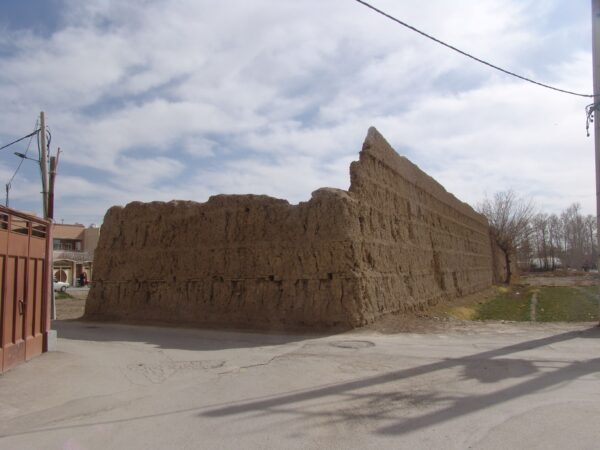
Of the forty large and thriving icehouses of Isfahan in the late Nāṣer al-Dīn Shah period20 and the forty-two people employed in the icehouse profession at the end of the Qajar era,21 only nineteen icehouses remained at the beginning of the Pahlavi period.22 This number increased during the Pahlavi era and, by the early 1970s/1350s, at the end of the life of traditional icehouses, reached sixty-three units on the north and south sides of the Zāyande-Rūd. Muhammad-Hussein Khān Kāzerūnī*, Faḍlullāh Dehesh* (‛Atāʾ al-Mulk), Mḥyu al-Dīn Kāshefī, and Akbar Mīrzā Ṣārem al-Dawle were among the owners, while the Jamadī, ‘Aqīlī, Nā‘em Eṣfahānī, Dardashtī, Mushtāqīān, Yakhchālī, and Māstbandzāde families were among the tenants and the well-known icehouse operators of Isfahan. At present, a faint image of the traditional icehouses of Isfahan remains in the remnants of two icehouses in the neighborhoods (villages) of Kūhānestān and Āzādān in the west of Isfahan, as well as in the name yakhchāl preserved in several streets and alleys of the city.23
/Mahdi Abulhasani Tarqi/
Bibliography
‛Aqīlī, ‛Abbās, Ṭarḥ-e Tadvīn-e Tārīkh-e Shafāhī-ye Eṣfahān, interview by Mahdi Abulḥasanī Tarqī, 12 November 2016/22 Ābān 1395.
‛Aqīlī, ‛Abbās, Ṭarḥ-e Tadvīn-e Tārīkh-e Shafāhī-ye Eṣfahān, interview by Mahdi Abulḥasanī Tarqī, 18 November 2016/28 Ābān 1395.
‛Aqīlī, Hasan, Ṭarḥ-e Tadvīn-e Tārīkh-e Shafāhī-ye Yakhchāl-hā-ye Sunnatī-ye Eṣfahān, interview by Mahdi Abulḥasanī Tarqī, 9 May 2018/19 Urdībehesht 1397.
‛Aqīlī, Mahdī, Ṭarḥ-e Tadvīn-e Tārīkh-e Shafāhī-ye Yakhchāl-hā-ye Sunnatī-ye Eṣfahān, interview by Mahdi Abulḥasanī Tarqī, 13 May 2018/23 Urdībehesht 1397.
‛Aqīlī, Muhammad, Ṭarḥ-e Tadvīn-e Tārīkh-e Shafāhī-ye Yakhchāl-hā-ye Sunnatī-ye Eṣfahān, interview by Mahdi Abulḥasanī Tarqī, 8 April 2018/19 Farvardīn 1397.
‛Aqīlī, Muhammad, Ṭarḥ-e Tadvīn-e Tārīkh-e Shafāhī-ye Yakhchāl-hā-ye Sunnatī-ye Eṣfahān, interview by Mahdi Abulḥasanī Tarqī, 8 May 2018/18 Urdībehesht 1397.
‛Aqīlī, Reza, Ṭarḥ-e Tadvīn-e Tārīkh-e Shafāhī-ye Yakhchāl-hā-ye Sunnatī-ye Eṣfahān, interview by Mahdi Abulḥasanī Tarqī, 14 May 2018/24 Urdībehesht 1397.
Arbāb Eṣfahānī, Muhammad-Mahdi b. Muhammad-Reza, Neṣf-e Jahān fī Ta‘rīf al-Eṣfahān, ed. Manūchehr Sutūde, Tehran: Amīr Kabīr, 1989/1368.
Chardin, Jean, Travels in Persia, London: The Argonaut Press, 1927.
Hoeltzer, Ernst, Hezār Jelve-ye Zendegī: Taṣvīrhā-ye Ernst Hoeltzer az ‘Ahd-e Nāṣerī, research by Parīsā Damandān, Tehran: Iranian Cultural Heritage Organization, Center for Documentation and Records of Cultural Heritage, 2003/1382.Bottom of Form
Hourcade, Bernard and Berteaux, Marie Pierre, “Yakhchāl-hā-ye Sunnatī-ye Falāt-e Iran,” trans. Abū’l-Hasan Sarvāqad-muqaddam, Faslnāme-ye Taḥqīqāt-e Juqrāfīyāʾī, no. 37, Summer 1995/1374.
Jamadī, ‘Abbās, Ṭarḥ-e Tadvīn-e Tārīkh-e Shafāhī-ye Yakhchāl-hā-ye Sunnatī-ye Eṣfahān, interview by Mahdi Abulḥasanī Tarqī, 17 April 2018/28 Farvardīn 1397.
Jamālzāde, Muhammad-Ali, Farhang-e Lughāt-e ‘Āmīyāne, ed. Muhammad-Ja‘far Maḥjūb, Tehran: Farhang-e Iran-Zamīn, 1962/1341.
Janāb Eṣfahānī, Ali, al-Eṣfahān, ed. ‘Abbās Naṣr, Isfahan: Nashr-e Gulhā, 1992/1371.
Jorgensen, Hemming, Ice houses of Iran: where, how, why, Costa Mesa: Mazda Publishers, 2012.
Maqdesī, Muṭahhar b. Ṭāher, Āfarīnesh va Tārīkh, introduction, translation and annotations by Muhammad-Reza Shafī‘ī Kadkanī, Tehran: Āgah, 1995/1374.
Nā‘em Eṣfahānī, ‘Abbās, Ṭarḥ-e Tadvīn-e Tārīkh-e Shafāhī-ye Yakhchāl-hā-ye Sunnatī-ye Eṣfahān, interview by Mahdi Abulḥasanī Tarqī, 15 May 2018/25 Urdībehesht 1397.
Nā‘em Eṣfahānī, Ghulām-Ali, Ṭarḥ-e Tadvīn-e Tārīkh-e Shafāhī-ye Yakhchāl-hā-ye Sunnatī-ye Eṣfahān, interview by Mahdi Abulḥasanī Tarqī, 13 May 2018/23 Urdībehesht 1397.
Nā‘em Eṣfahānī, Murtaḍā, Ṭarḥ-e Tadvīn-e Tārīkh-e Shafāhī-ye Yakhchāl-hā-ye Sunnatī-ye Eṣfahān, interview by Mahdi Abulḥasanī Tarqī, 13 May 2018/23 Urdībehesht 1397.
Pāpulī Yazdī, Muhammad-Hussein and Labbāf Khānīkī, Majīd, “Yakhchāl va Tulīd-e Yakh-e Maṣnū‘ī,” in Second Regional Conference on Climate Change, 4 November 1999, Tehran: Iranian Meteorological Organization, 1999/1378.
Qubādīyān, Vahīd, Barresī-ye Eqlīmī-ye Abnīye-ye Sunnatī-ye Iran, Tehran: University of Tehran, 1994/1373.
Rahbarān, Jamāl, Ṭarḥ-e Tadvīn-e Tārīkh-e Shafahī-ye Bāzār-e Eṣfahān, interview by Mahdi Abulḥasanī Tarqī, 10 February 2019/21 Bahman 1397.
Shafaqī, Sīrūs, Juqrāfīyā-ye Eṣfahān: be ḍamīme-ye 150 qeṭ‛e naqshe, nemūdār va ‛aks, 2nd ed., Isfahan: University of Isfahan, 2002/1381.
Siroux, Maxime, Caravanserails d’Iran et petites constructions routieres, Cairo: Imprimerie de l’Institut Francais d’Archeologie Orientale,1949.
Sulṭān Sayyed Reza Khān, Naqshe-ye Dār al-Salṭane-ye Eṣfahān, scale 1:4000, Isfahan: Maṭba‛e-ye Mīrzā Hussein Farhang, 1923/1302.
Taḥvīldār, Hussein b. Muhammad Ebrāhīm, Juqrāfīyā-ye Eṣfahān, ed. Manūchehr Sutūde, Tehran: University of Tehran, 1963/1342.
- Pāpulī Yazdī and Labbāf Khānīkī, p. 335-336.[↩]
- Maqdesī, vol. 2, p. 962.[↩]
- Jorgensen, p. viii.[↩]
- Jorgensen, p. 8.[↩]
- Siroux, p. 131-132.[↩]
- Hoeltzer, 2003.[↩]
- Taḥvīldār, 1342/1963.[↩]
- Qubādīyān, p. 316, 318.[↩]
- Hourcade and Berteaux, p. 59.[↩]
- Ghulām-Ali Nā‛em Eṣfahānī, interview, 13 May 2018/ 7 Urdībehesht 1397; Ḥasan ‛Aqīlī, interview, 9 May 2018/19 Urdībehesht 1397; Muhammad ‛Aqīlī, interview, 8 April 2018/19 Farvardīn 1397; idem, interview, 8 May 2018/18 Urdībehesht 1397.[↩]
- Shafaqī, p. 47-48.[↩]
- Ibid., p. 55.[↩]
- Rahbarān, interview, 10 February 2019/21 Bahman 1397; ‛Abbās ‛Aqīlī, interview, 12 November 2016/22 Ābān 1395; idem, interview, 18 November 2016/28 Ābān 1395.[↩]
- Qubādīyān, p. 321.[↩]
- ‛Abbās Nā‘em Eṣfahānī, interview, 15 May 2018/25 Urdībehesht 1397.[↩]
- Ḥasan ‛Aqīlī, interview, 9 May 2018/19 Urdībehesht 1397; Murtaḍā Nā‛em Eṣfahānī, interview, 13 May 2018/23 Urdībehesht 1397; ‘Abbās Nā‘em Eṣfahānī, interview, 15 May 2018/25 Urdībehesht 1397.[↩]
- Arbāb Eṣfahānī, p. 85; ‛Abbās ‛Aqīlī, interview, 12 November 2016/22 Ābān 1395; idem, interview, 18 November 2016/28 Ābān 1395; Chardin, p. 239.[↩]
- Muhammad ‛Aqīlī, interview, 8 April 2018/19 Farvardīn 1397; idem, interview, 8 May 2018/18 Urdībehesht 1397; Murtaḍā Nā‛em Eṣfahānī, interview, 13 May 2018/23 Urdībehesht 1397.[↩]
- Jamālzāde, p. 466; Jamadī, interview, 17 April 2018/28 Farvardīn 1397; Rahbarān, interview, 10 February 2019/21 Bahman 1397; Ḥasan ‛Aqīlī, interview, 9 May 2018/19 Urdībehesht 1397; Reza ‘Aqīlī, interview, 14 May 2018/24 Urdībehesht 1397; ‘Abbās ‘Aqīlī, interview, 12 November 2016/22 Ābān 1395; idem, interview, 18 November 2016/28 Ābān 1395; Muhammad ‛Aqīlī, interview, 8 April 2018/19 Farvardīn 1397; Mahdī ‛Aqīlī, interview, 13 May 2018/23 Urdībehesht 1397; Muhammad ‛Aqīlī, interview, 8 May 2018/18 Urdībehesht 1397; ‛Abbās Nā‛em Eṣfahānī, interview, 15 May 2018/25 Urdībehesht 1397; Murtaḍā Nā‛em Eṣfahānī, interview, 13 May 2018/23 Urdībehesht 1397; Ghulām-Ali Nā‛em Eṣfahānī, interview, 13 May 2018/23 Urdībehesht 1397.[↩]
- Arbāb Eṣfahānī, p. 59.[↩]
- Janāb Eṣfahānī, p. 126.[↩]
- Sulṭān Sayyed Reza Khān, 1923/1302.[↩]
- Hourcade and Berteaux, p. 58.[↩]